Edo period

© JAPAN-PHOTO-ARCHIV

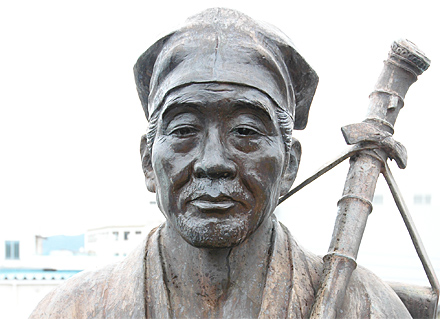
Matsuo Bashô 松尾芭蕉
(1644-94)


H 233 141

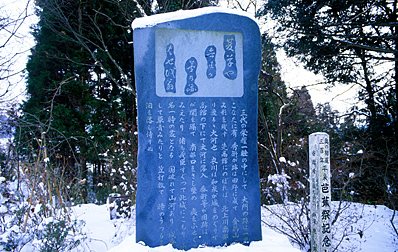
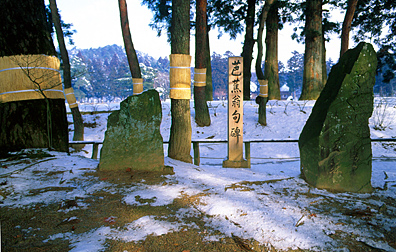
Matsuo Bashô, one of the greatest literary figures of Japan, brought haiku (= form of poetry consisting of only 17 syllables in five-seven-five pattern) from a mere pastime of townsmen up to the level of an art in which the beauty and richness of the Japanese language are sought. He spent most of his time traveling round the country. At the age of 45 he started for a long journey round the north-eastern part of Honshû, where he wrote Okuno-Hosomichi, a collection of his most famous haiku. In 1694 Bashô passed away in Ôsaka.


D 240 913
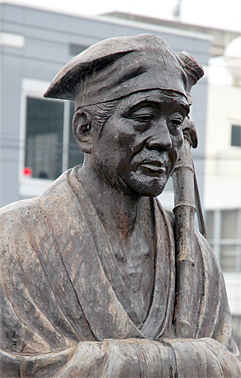
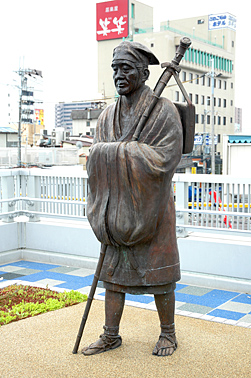
Matsuo Bashô (1644-94)
sculpture - Ôtsu City
Edo period / history

D 240 911
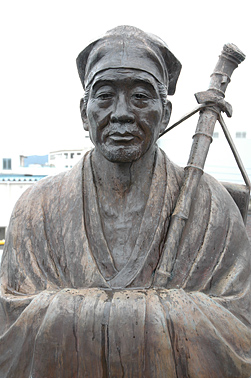
Matsuo Bashô
sculpture - Ôtsu  (2)
Edo period / history
D 240 918
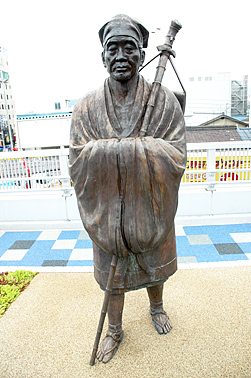
Matsuo Bashô
sculpture - Ôtsu  (3)
Edo period / history
D 240 916
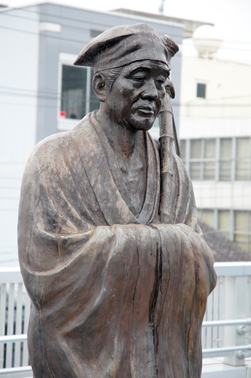
Matsuo Bashô
sculpture - Ôtsu  (4)
Edo period / history

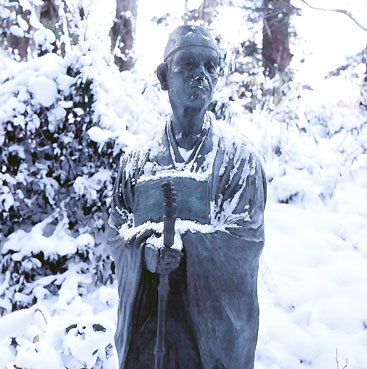
J 227 295
Matsuo Bashô
sculpture / Chûson-ji temple - Hiraizumi City
Edo period / history
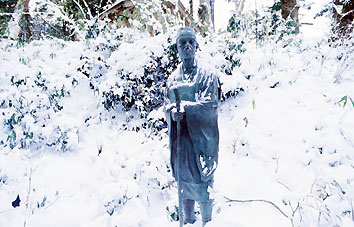
J 227 290
Matsuo Bashô
sculpture / Chûson-ji - Hiraizumi  (2)
Edo period / history

J 227 338
Matsuo Bashô
memorial stone / Chûson-ji
Edo period / history
J 227 338a
Matsuo Bashô
Bashô haiku / Chûson-ji - Hiraizumi
Edo period / history

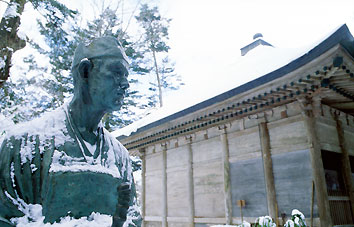
H 233 141
Matsuo Bashô
sculpture / Chûson-ji - Hiraizumi  (3)
Edo period / history